
Masts and Tripods for Broadcasting: Portable Field Support for TV and Radio Operations
Why Choose Rolatube Portable Masts and Tripods for Broadcasting
TV and radio field operations need equipment that is easy to transport and quick to set up for breaking news or remote broadcasts. Rolatube’s patented bistable rollable composite technology provides the essential portability, dependability, and user-friendly operation that broadcast engineers require.
Initially engineered for military use and now adopted for industrial applications worldwide, Rolatube masts and tripods offer proven field performance for the broadcast sector. In contrast to conventional masts or heavy tripods, our unique rollable composite design delivers superior portability and fast deployment, reducing airtime delays and ensuring rapid operational readiness.
Industry professionals select Rolatube to overcome logistical hurdles in the field, benefiting from significantly reduced transport weight, simple storage, and reliable performance without the bulk associated with standard equipment.
The Challenges of Broadcast Operations in the Field
Transmitting from temporary or isolated sites introduces specific logistical difficulties that fixed infrastructure struggles to resolve.
Lack of Fixed Infrastructure
Remote filming sites frequently lack the necessary towers or mounting points for antennas and transmission gear. Broadcasters require independent solutions to secure reliable signal paths and communications from undeveloped locations.
Need for Stability and Elevation
Securing clear signal paths and optimal camera perspectives requires stable, elevated platforms. However, accomplishing this with standard gear often involves moving heavy equipment, which delays setup.
Operational Agility and Constraints
Deployments need to be rapid, mobile, and safe, often managed by solitary operators or small teams. Furthermore, transport limitations for vehicles and aircraft restrict the dimensions and mass of gear that can be brought to the site.
Why Portable Masts and Tripods Are Ideal for TV and Radio Broadcasting
Portable mast and tripod systems connect the capability of studio infrastructure with the mobility required in the field, granting broadcasters the versatility to function efficiently from any setting.
Tripods provide stable platforms for camera mounting in temporary locations, whilst masts deliver elevated positioning for antennas, transmission equipment, and lighting arrays where fixed infrastructure is unavailable.
- Universal deployment: Simple to move to stadiums, open-air events, breaking news sites, and disaster areas.
- Immediate infrastructure: Supply instant backing for communications, signal relay, and camera placement.
- Operational versatility: Appropriate for both brief news gathering and prolonged field production tasks.
- Wide compatibility: Accommodate a range of antennas, microwave links, lighting arrays, and broadcast cameras.
Key Advantages of Rolatube Broadcast Masts and Tripods
Lightweight and Compact Design
Rolatube systems are designed for swift movement between sites. Their rollable composite build results in low weight and minimal packed dimensions, enabling gear to be hand-carried or stowed in standard vehicles without special requirements.
Quick Deployment
Speed is vital in broadcasting. Rolatube units deploy in minutes without needing heavy lifting gear. This fast setup ensures crews are operational promptly, capturing footage or setting up transmission links quickly.
Maintenance-Free Reliability
Featuring no moving parts to jam or rust, Rolatube systems are practically maintenance-free. This dependability is crucial for equipment that might be stored for intervals and then needed for immediate field performance.
Durability in Extreme Conditions
Weatherproof and constructed to endure severe environments, Rolatube masts and tripods function reliably in extreme states, from coastal winds to freezing cold, ensuring broadcast continuity whatever the weather.
Flexible Options
Both our masts and tripods are available in a range of height configurations with varying load capacities. This means you can select a tripod at the appropriate height and load rating for your camera requirements, and choose a mast with the necessary elevation for antennas, transmission gear, and lighting equipment. Each system can be matched to your specific operational needs.
Benefits for Broadcasters
The unique features of Rolatube masts and tripods translate into real, practical benefits for broadcasters. Our portable systems enable broadcast crews to move between sites quickly and set up in minutes with minimal personnel. The lightweight design and compact storage reduce transport costs whilst freeing valuable vehicle space for additional backup equipment. Additionally, the reliable performance in outdoor conditions ensures operations continue without interruption during live transmissions.
Portable Mast Applications in TV and Radio
Outside Broadcast (OB) Operations
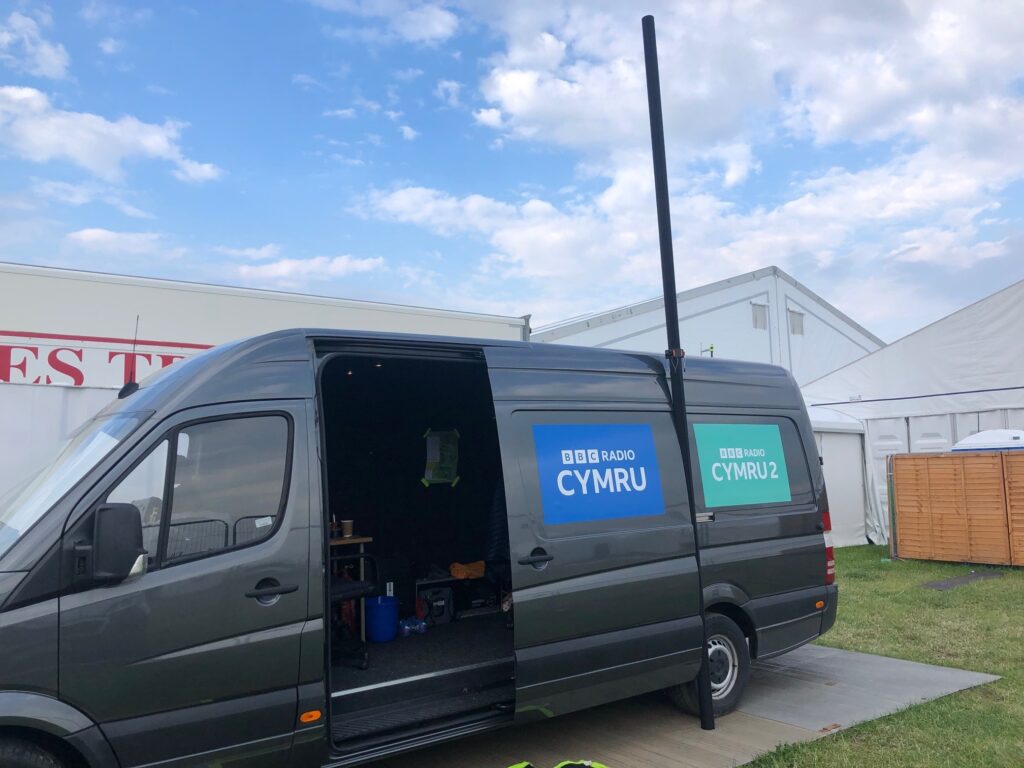
For OB teams, Rolatube masts offer temporary mounting solutions for antennas and relay gear. Their rapid assembly enables OB vehicles to secure links immediately upon reaching a venue.
Live Event Coverage
At sports matches and festivals, Rolatube masts carry wireless camera receivers and comms antennas, while tripods offer steady mounting for static cameras where building scaffolding isn’t an option.
Disaster or Emergency Reporting
When broadcasting from disaster areas, instant communication is essential. Masts support satellite or microwave links, whereas tripods hold cameras for live reports in regions with compromised infrastructure.
Temporary Studio or Field Production
For temporary studios or location shoots, tripods provide versatile camera placement, while masts carry necessary signal and lighting gear to establish a professional broadcast setting in provisional spots.
Mobile Radio Units
Masts mounted on vehicles allow mobile radio teams to set up transmission quickly, expanding the reach of remote broadcasts. Tripods accommodate portable webcams or visual radio equipment.
Rolatube Mast Systems for Broadcasting
Tripods for Camera Mounting
Rolatube tripods provide steady, lightweight backing for broadcast cameras, allowing operators to set up positions rapidly in challenging spots.
| Product | Packed Size | Weight | Max. Height | Load Capacity |
|---|---|---|---|---|
| System 30: Industrial Compact Tripod (ICT) | From 190mm x 200mm x 180mm | 2.84kg* | Up to 1.29m | Up to 40kg |
| System 50: Tripod | 250mm x 320mm x 260mm | From 3.5kg | Up to 2.8m | Up to 115kg |
*without pegs
Masts for Communications, Lighting and Transmission
Rolatube masts deliver the necessary elevation for antennas, lighting, and transmission hardware.
| System | Packed Size | Weight | Max. Height | Load Capacity |
|---|---|---|---|---|
| System 50: Single Tube Mast | 170mm x 250mm x 180mm | From 2kg | Up to 4m | Up to 10kg |
| System 75: Single Tube Mast | 280mm x 330mm x 250mm | From 3.8kg | Up to 7m | Up to 11kg |
| System 75: Double Tube Mast | 280mm x 330mm x 250mm | From 5.8kg | Up to 7m | Up to 23kg |
| System 100 Mast | From 250mm x 320mm x 260mm* | From 22.7kg | Up to 10m | Up to 15kg |
| System IAM: 3.5m | Rolled size of 150mm | 2.3kg | 3.5m | N/A – 136-175MHz frequency range** |
| System IAM: 7m | 280mm x 400mm x 280mm | 6.2kg | Up to 7m | N/A – 136-175MHz frequency range** |
*2 bag sizes – mast/Rolacage (305.5mm x 425mm x 262.5mm), or packed ancillaries (250mm x 320mm x 260mm)
**other UHF & VHF frequencies are available in the Integrated Antenna Masts, please contact rolatube for details.
Supporting Your Broadcast Operations
Rolatube’s portable masts and tripods deliver rapid deployment, exceptional portability, and maintenance-free operation for broadcast teams working in remote locations, at live events, and during emergency reporting.
Our rollable composite technology provides the lightweight, compact solutions that modern broadcasting demands, enabling crews to move quickly between sites, operate with minimal personnel, and maintain reliable performance in challenging outdoor conditions.
Explore our range of masts and tripods, or get in touch with our team for further information on how our systems can enhance your broadcast operations.
FAQs: Portable Masts and Tripods for Broadcasting
Why are portable masts used in outside broadcast operations?
Portable masts provide temporary infrastructure where fixed facilities are unavailable, enabling OB teams to establish communications, signal relay, and lighting at sports arenas, concerts, or breaking news sites.
Can portable masts be used for live TV transmission?
Yes, they’re well-suited for microwave links, satellite antennas, and RF relays, providing the elevation needed for line-of-sight connectivity and reliable signal transfer.
How do portable masts support radio broadcasting in the field?
Portable masts elevate transmission antennas to optimise signal reach, supporting temporary transmission sites, mobile radio vehicles, and extended field reporting range.
Are portable masts suitable for mobile broadcast vehicles?
Yes. Their compact size and lightweight design make them ideal for OB trucks and news vans – they stow easily and deploy instantly upon arrival.
How quickly can a portable mast be deployed for a broadcast setup?
Rolatube masts deploy in under five minutes with minimal personnel, critical for breaking news and time-sensitive broadcasts.
Are portable masts affected by wind during external broadcasts?
Rolatube masts are tested to winds up to 100kph (bare masts), with guy ropes required for all uses.
Can tripods be used for temporary studio or field production camera mounting?
Yes, Rolatube tripods provide stable, lightweight camera mounting for temporary studios and location work – ideal for static angles and interview setups.
Do portable masts and tripods reduce setup time for small broadcast crews?
Yes, considerably. Their lightweight design and simple assembly allow small teams to rig and de-rig much faster than conventional equipment.
Where are portable masts and tripods most commonly deployed in broadcasting?
Common deployments include sporting events, festivals, political gatherings, disaster zones, remote filming locations, and any OB scenario requiring rapid temporary infrastructure.